Project
AI Content Factory
Nine n8n workflows that take an educational social-media brand from topic research to carousels published on Instagram, Facebook and LinkedIn.
Overview
The client runs an educational brand that explains the meaning and origin of everyday words, word parts and idioms in plain language, as multi-slide carousels for Instagram, Facebook and LinkedIn. Every post used to mean brainstorming terms without repeats, researching several dictionaries, fact-checking, designing the slides and a PDF, planning the schedule and publishing to three platforms by hand. The client wanted to keep editorial control, with nothing published unapproved, and remove everything mechanical.
Architecture
Nine loosely coupled n8n workflows around one source of truth: a NocoDB table where every term moves through a status lifecycle, from new through researched, approved and graphic ready to scheduled and published. Each workflow reacts to a status change through a webhook, does its job and sets the next status, so any step can be re-run, paused or edited by hand without breaking the rest.
The workflows
- Idea discovery: an LLM agent proposes new terms for each of the three categories; the output is parsed and checked against the database, so only genuinely new terms are added.
- Research (about 55 nodes): words and word parts are looked up in two online dictionaries in parallel and turned into clean meaning and origin fields by a structured extractor; idioms go to an AI agent with web search that cross-checks sources and returns validated JSON.
- Approval in Telegram: Approve, Research again or Manual review, one tap each; the message updates itself, so the chat doubles as an audit log, and “Research again” feeds straight back into research.
- Graphic generators, one per category: HTML and CSS slides are built from the database, rendered to PNG and PDF by headless Chromium (Browserless) with retries, and stored per term in Seafile.
- A config-driven closing slide: one node controls the call to action shared by all future posts.
- A daily planner keeps a rolling queue (for example 18 posts ahead) balanced by content-mix rules and warns in Telegram when a category runs low.
- A publisher posts every day: an Instagram carousel (with container-status polling), slide 1 as a Facebook photo post and the PDF as a LinkedIn document, then records the result or sends a detailed alert.
Built to run unattended
- LLM output: strict JSON-only prompts, a structured extractor and validation code before anything is saved.
- Duplicates: database checks before insert, record locking before research, and an execution guard in the planner against overlapping triggers.
- Crashed runs: a watchdog every 10 minutes releases records locked for more than 20 minutes, which re-triggers them.
- Missed webhooks: a 15-minute catch-up schedule picks up anything a webhook missed.
- Flaky rendering and strict social APIs: separate retry counters with waits, Instagram container polling, LinkedIn multi-step upload, and per-platform result merging.
- Telegram alerts for errors, an empty queue and low stock.
Outcome
- The whole operation, from idea to published post, runs on schedule without manual work.
- The editor’s role is one tap per term; every record’s progress is visible in a single status column, and any step can be restarted by changing the status.
- Consistent visual quality across hundreds of posts with no design time.
- New content categories or platforms are added by cloning a workflow and adjusting its config node.
Workflows
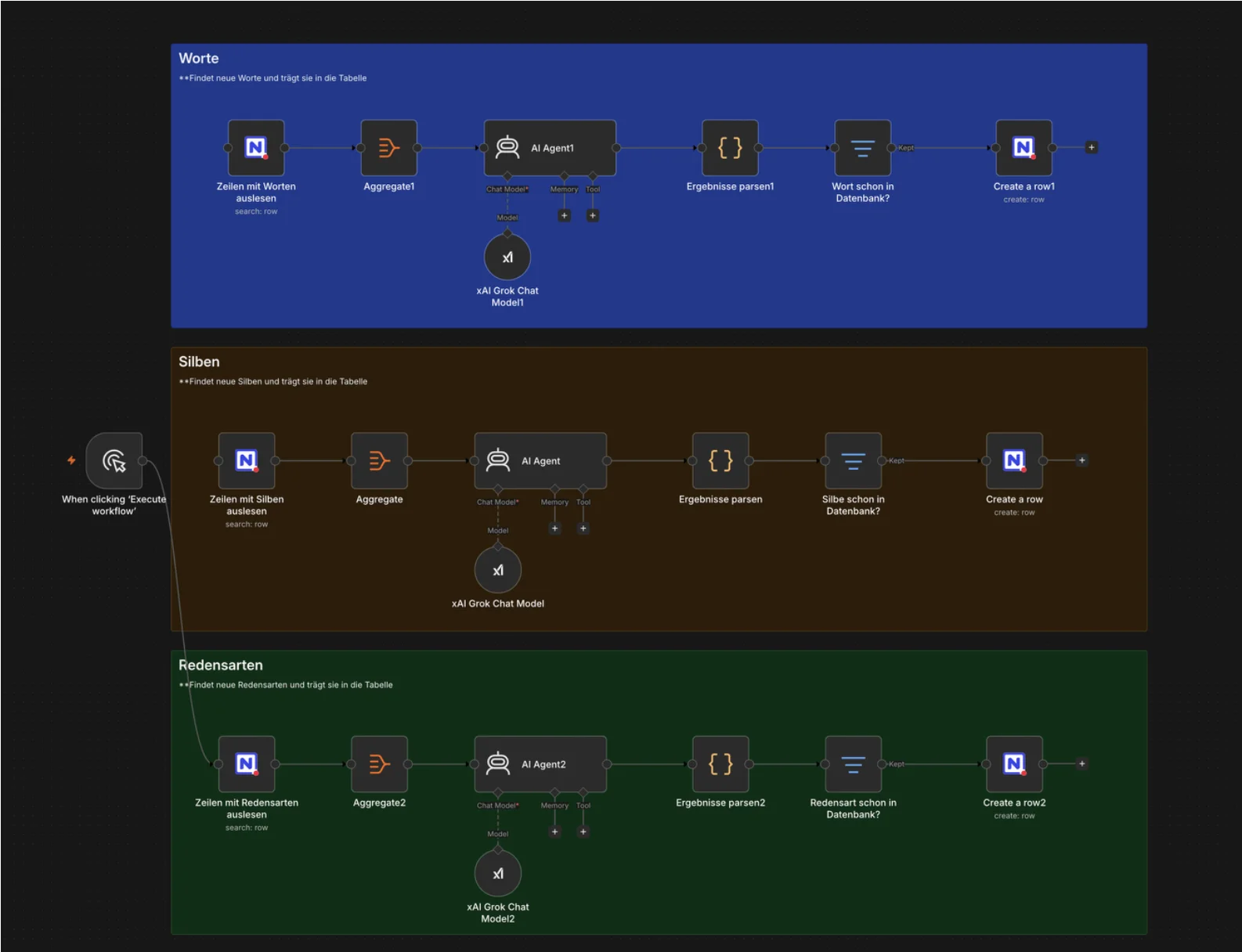
01 · Idea discovery for words, word parts and idioms
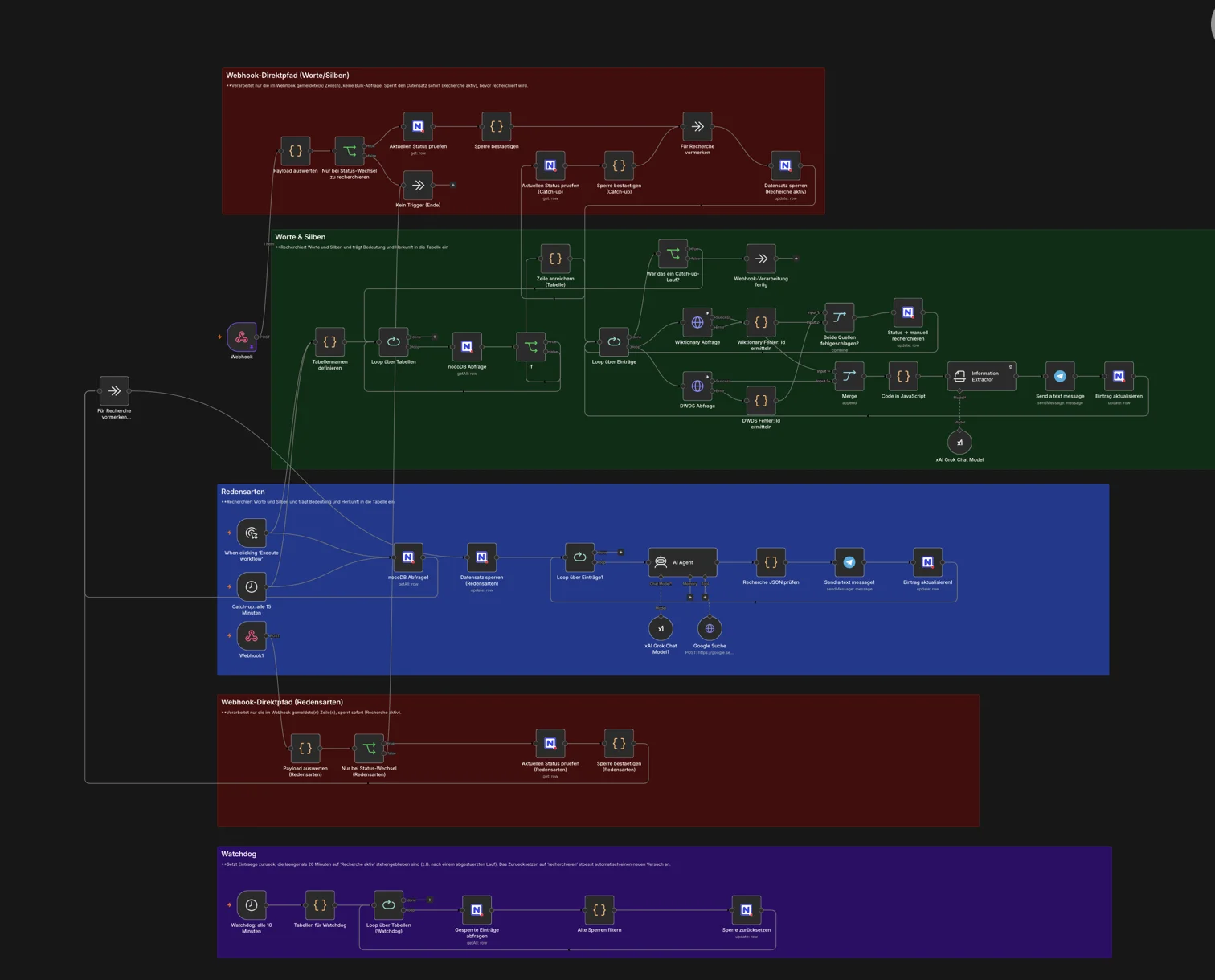
02 · Research: webhook paths with record locking, dictionaries, AI web research and the watchdog
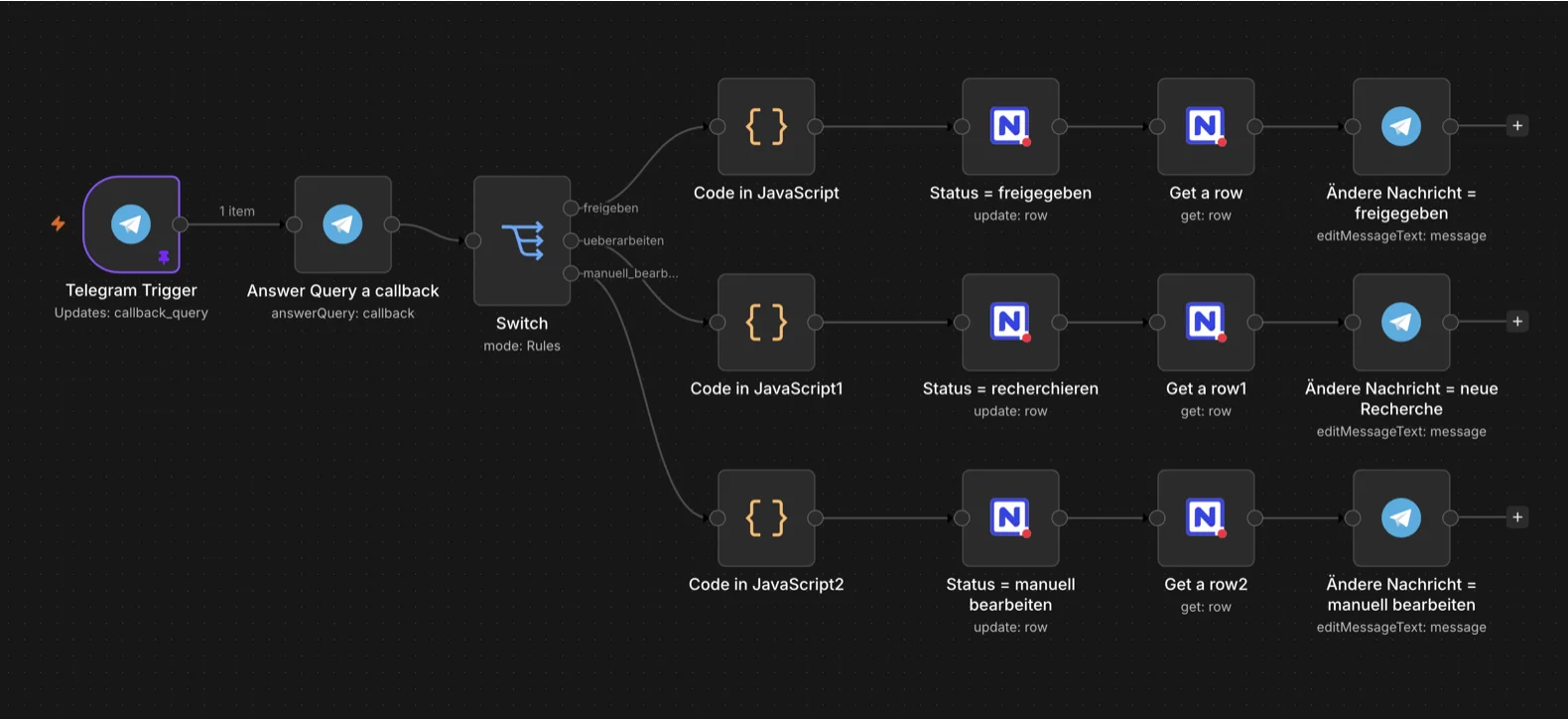
03 · Telegram approval: approve, research again or manual review
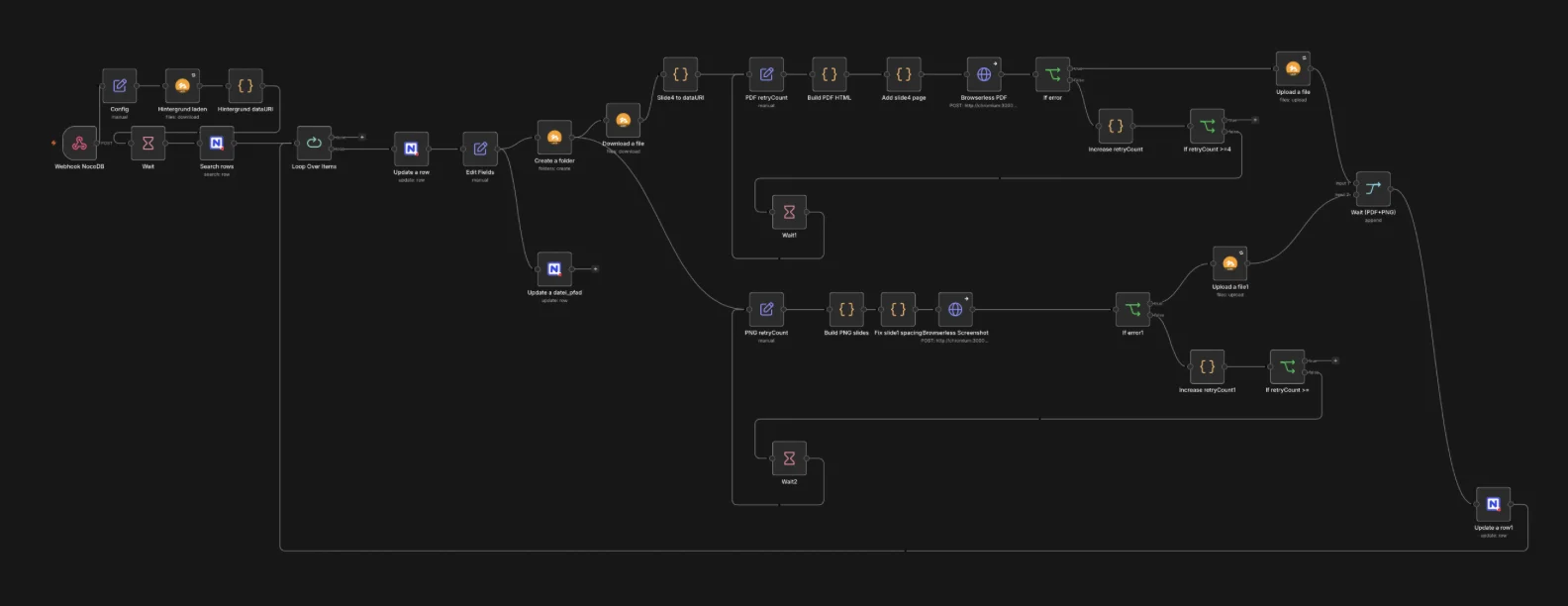
04 · Graphic generator (one of three, per content category)
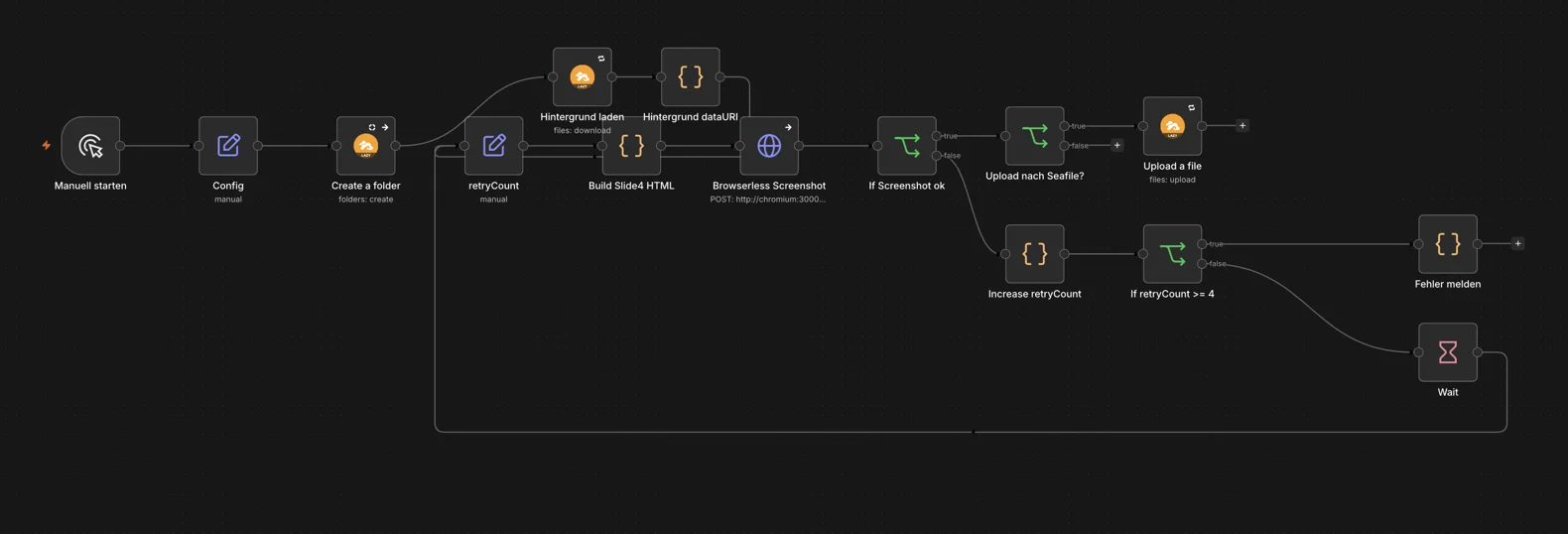
04d · Config-driven closing slide
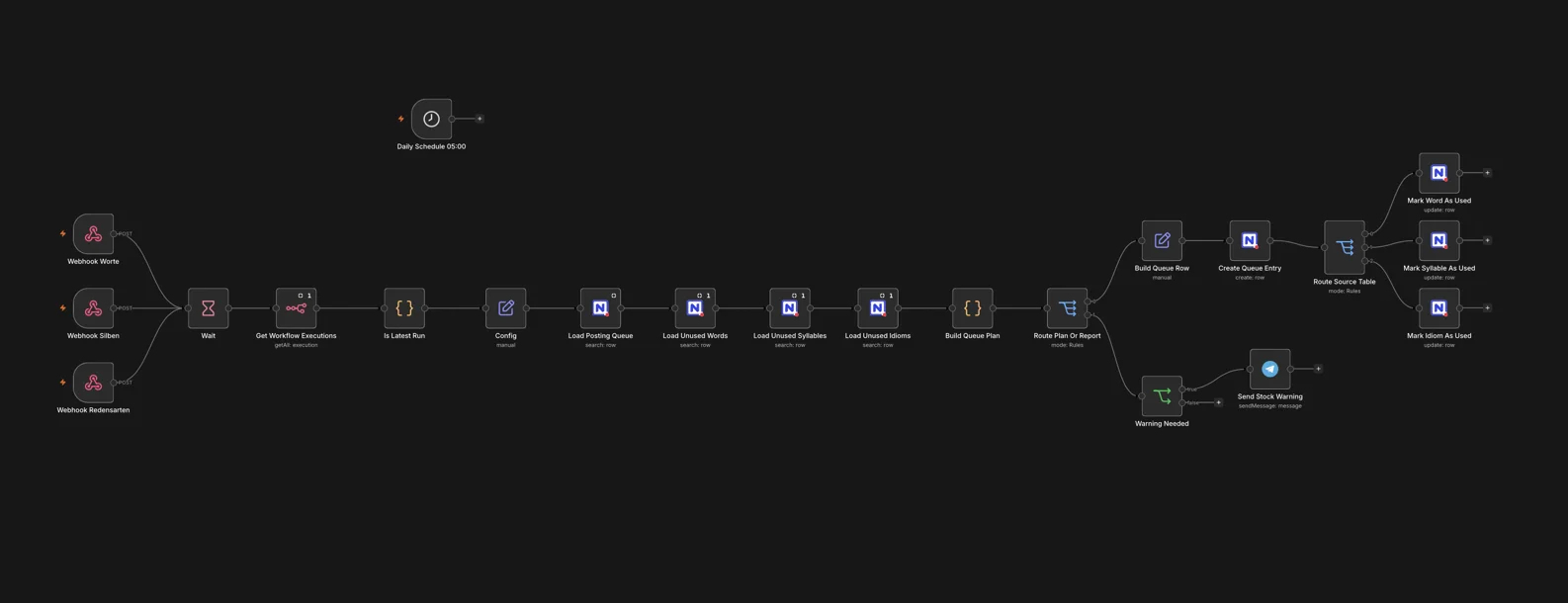
05a · Daily social media planner
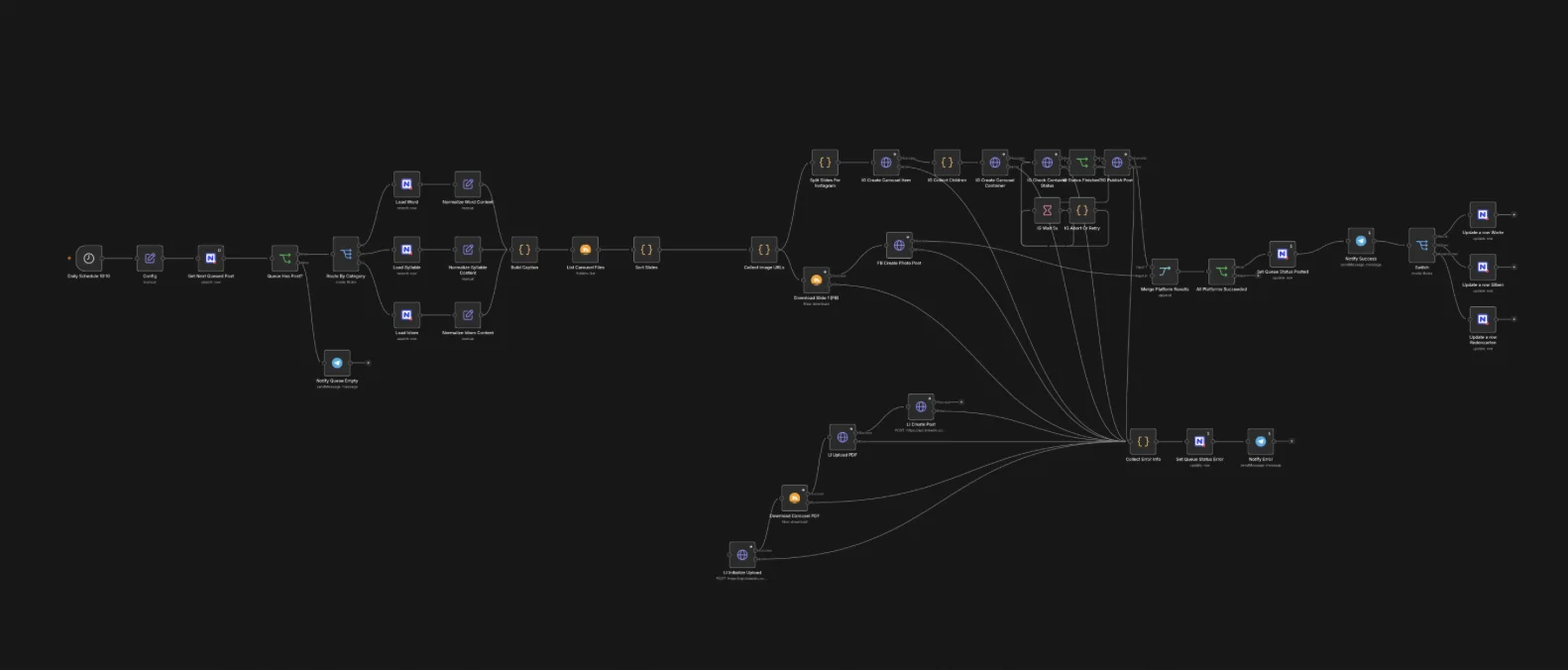
05b · Multi-platform publisher
Facts
- Type
- Client project · n8n automation
- Role
- Solo automation engineer: all workflows, AI logic and API integrations
- Scope
- 9 production workflows; one human decision point
- Published
- October 2026
- Stack
- n8n (self-hosted), NocoDB, xAI Grok, Browserless (Chromium), Seafile, Telegram Bot API, Meta Graph API, LinkedIn API
Links